
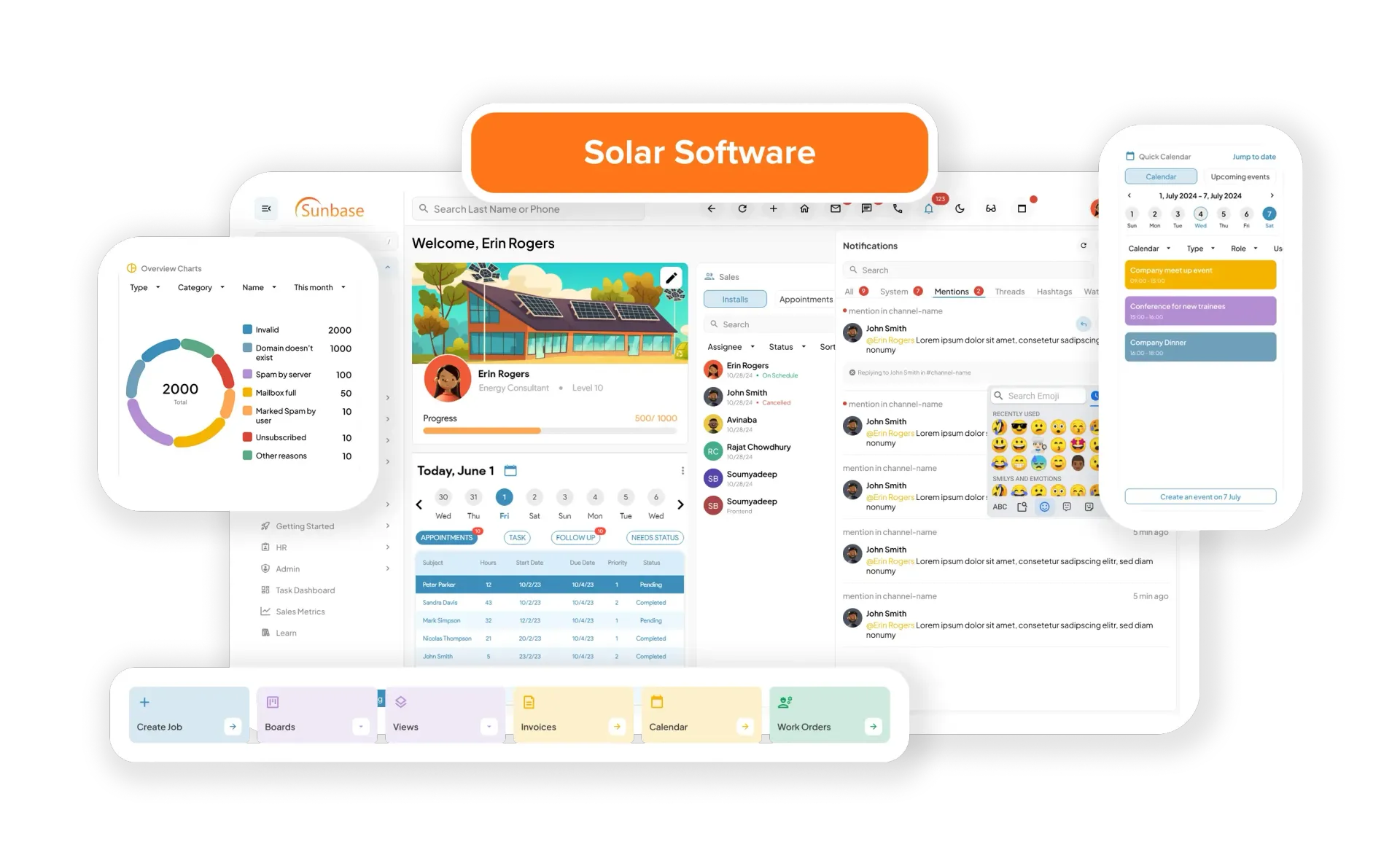
Stop Paying for Multiple Solar Software Tools
Run Your Entire Solar Business From One Connected Platform
Replace disconnected systems for solar CRM, rooftop design, proposal generation, financing coordination, permitting workflows, installation scheduling, project management, operational reporting, and customer communication with one unified solar operations platform built for modern solar businesses.
What Is Solar Software?
Solar software helps solar installers, EPC companies, and solar sales teams manage the entire customer and operational workflow from one centralized platform including lead management, rooftop solar design, proposals, financing, permitting, installations, project coordination, customer communication, inspections, PTO tracking, and reporting.
Most solar companies still use separate platforms for CRM, solar design, proposals, financing, scheduling, project management, and operational tracking. In many cases, the solar design process itself is handled in a completely different system from the sales and operational workflow.
This creates disconnected communication between sales teams, design teams, permitting coordinators, installation crews, and operations managers, often leading to:
- proposal delays
- duplicated customer information
- permitting bottlenecks
- slower PTO approvals
- missed homeowner follow ups
- installation coordination issues
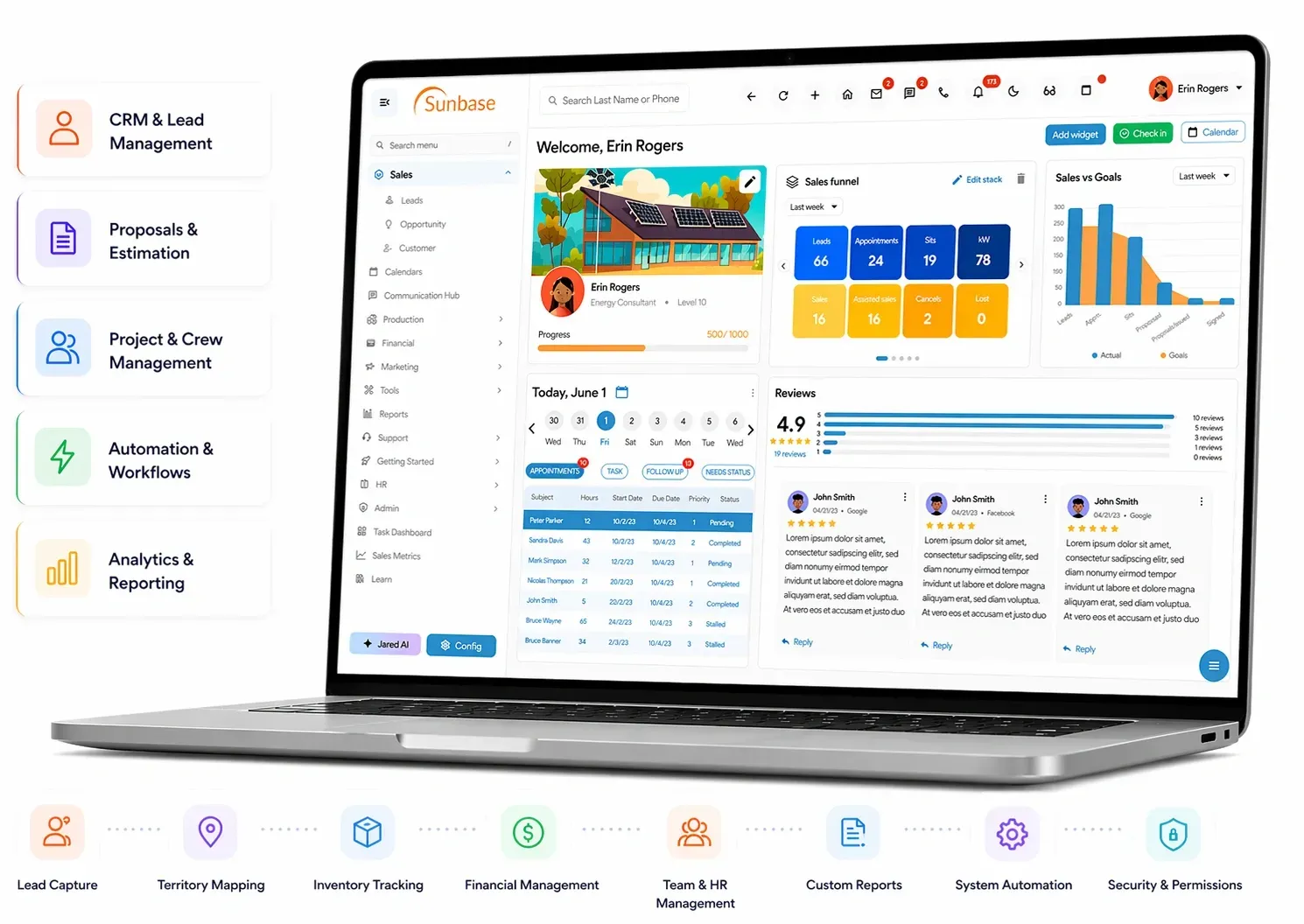
Sunbase is an all in one solar software platform built specifically for solar businesses, helping companies connect sales, solar design, proposals, financing, permitting, inspections, installations, PTO workflows, and operational tracking into one connected workflow.
With built in
solar CRM, proposal generation, rooftop design workflows, project management, financing coordination, and operational visibility, Sunbase helps solar companies streamline the complete journey from
lead capture to completed installation.
Challenges with Managing Solar Operations Using Disconnected Software
Most solar companies struggle to manage sales, solar design, proposals, financing, permitting, inspections, installations, PTO coordination, and project operations efficiently because workflows are spread across multiple disconnected tools.
Without connected systems, solar businesses often experience:
- Delayed proposal turnaround due to disconnected design and sales workflows
- Poor visibility into sales pipelines, permitting status, inspections, installations, and PTO progress
- Communication gaps between sales reps, design teams, operations coordinators, and installation crews
- Manual data entry and scattered homeowner information across spreadsheets and separate platforms
- Delays in site surveys, permitting approvals, inspections, and project handoffs
- Limited operational visibility into workflow bottlenecks and project delays
These operational challenges become harder to manage as solar companies grow and handle more projects simultaneously.
Platforms like Sunbase help solar businesses centralize solar CRM, rooftop design, proposals, permitting workflows, installation coordination, and operational visibility into one connected operational platform.
Why Solar Companies Are Moving Toward Connected Operations Platforms
As solar companies grow, managing operations through separate systems for solar CRM, rooftop design, proposals, financing, permitting, inspections, scheduling, PTO tracking, and project management becomes increasingly difficult.
What starts as manageable workflows often turns into operational fragmentation across sales teams, design teams, permitting coordinators, installation crews, and operations managers.
Sales reps wait for proposal revisions. Design teams work in separate systems. Operations teams manage permitting, inspections, AHJ approvals, and PTO coordination through spreadsheets or disconnected tools.
At the same time, homeowner expectations continue to increase.
Customers expect:
- faster proposal turnaround
- accurate production estimates
- financing clarity
- smoother installation experiences
- real time project updates
- faster permitting and PTO communication
This is why many growing solar installers and EPC companies are moving toward connected solar operations platforms that unify solar CRM, rooftop design, proposal generation, permitting workflows, installation coordination, project management, and operational visibility into one centralized system.
Connected workflows help reduce delays, improve communication between teams, and streamline the customer journey from lead generation to completed installation.
One Connected Workflow for the Entire Solar Business
Modern solar companies need more than just a CRM or a PV design tool.
They need a connected solar operations platform that manages the complete workflow from lead generation and site surveys to solar design, proposal generation, financing coordination, permitting, installation scheduling, inspections, PTO approvals, and post project communication.
Step 1 — Capture & Manage Solar Leads
Track
inbound leads, canvassing activity, referrals, homeowner conversations, appointments, follow ups, and site survey scheduling from one connected system.
Explore Solar CRM Software
Step 2 — Design Solar Systems Faster
Create rooftop layouts, shading analysis, production estimates, system sizing, battery configurations, and engineering ready solar designs directly connected to proposal workflows.
Step 3 — Generate Professional Solar Proposals
Build accurate solar proposals with production estimates, financing options, battery add ons, utility savings calculations, e signatures, and customer ready presentations.
Step 4 — Manage Installations & Operations
Coordinate permitting, AHJ approvals, inspections, installation scheduling, crew coordination, PTO tracking, project handoffs, and homeowner updates from one operational dashboard.
Step 5 — Track Performance Across Teams
Monitor sales pipelines, proposal turnaround time, permitting progress, installation timelines, PTO approvals, team activity, operational KPIs, and project profitability with real time visibility across the entire business.
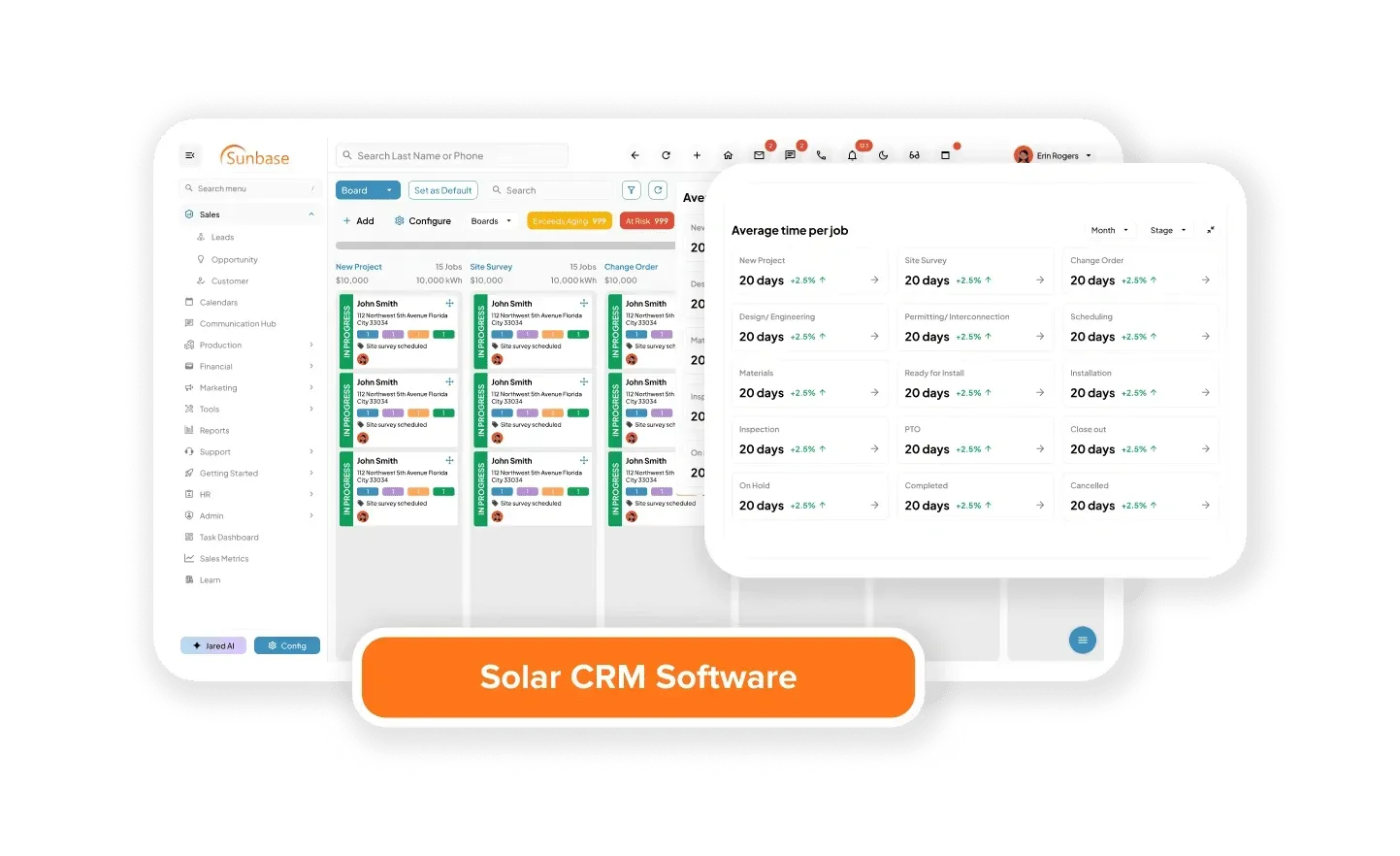
Generic CRM software often struggles to support the way modern solar companies actually operate.
Solar sales teams need more than basic lead tracking. They need a connected solar CRM platform that helps manage homeowner conversations, site survey scheduling, proposal follow ups, financing discussions, installation updates, permitting status, PTO progress, and communication between sales, design, and operations teams.
Without a connected workflow, many solar companies experience:
- delayed follow ups
- missed appointments
- scattered homeowner information
- proposal coordination delays
- limited visibility into the sales pipeline
Sunbase helps solar installers and EPC companies manage the complete customer journey from the first homeowner interaction to completed installation through one connected solar CRM workflow.
Key Features
- Lead management
- Automated follow ups
- Sales pipeline visibility
- Appointment scheduling
- Rep activity tracking
- Customer communication history
- Workflow automation
- Multi team coordination
Why Connected Solar CRM Workflows Matter
As solar businesses grow, disconnected sales workflows create communication gaps between sales reps, proposal teams, permitting coordinators, and installation teams.
A connected solar CRM workflow helps improve visibility, streamline homeowner communication, and reduce delays across the sales process.
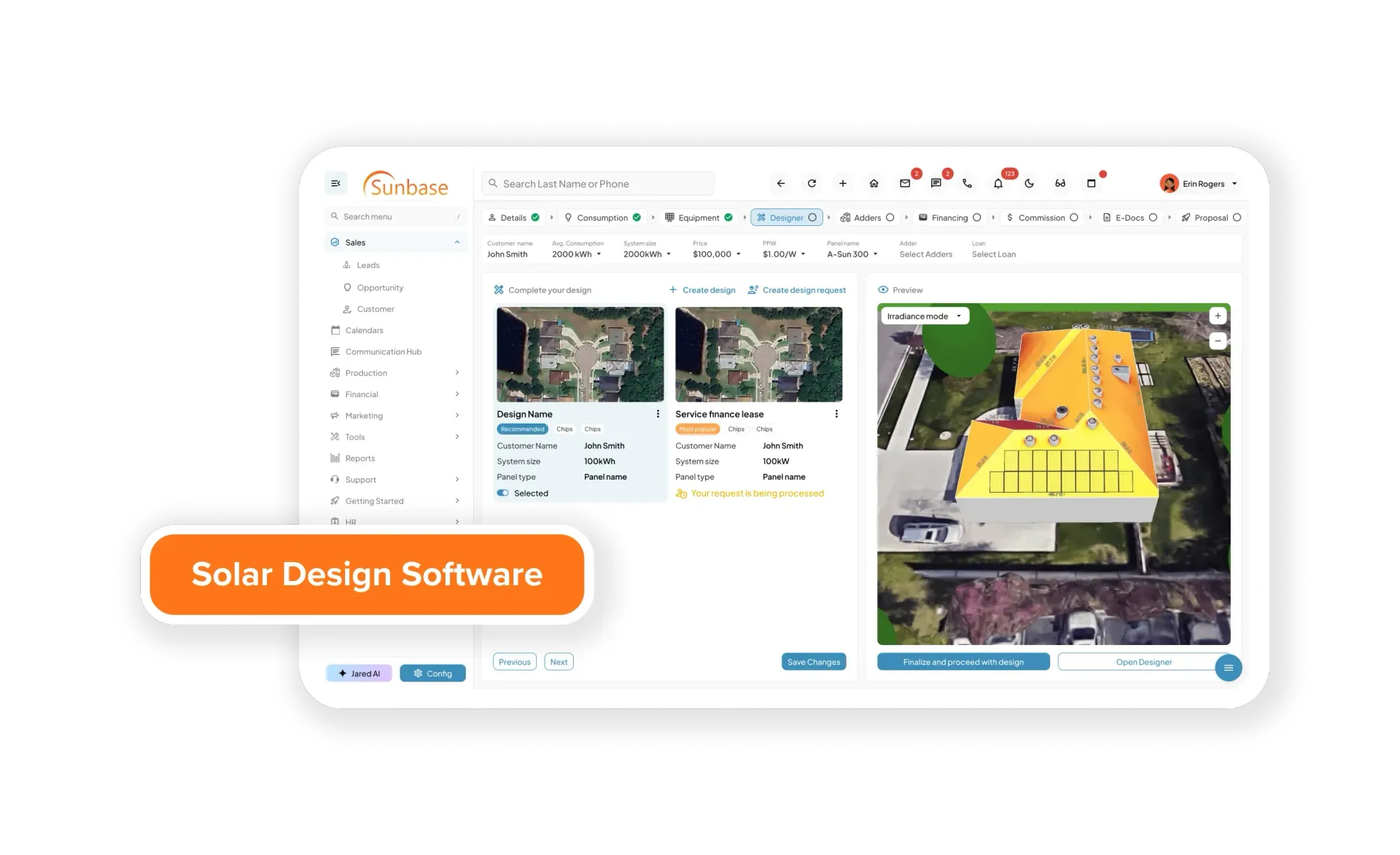
Most solar companies still use separate PV design tools disconnected from proposals, financing workflows, and customer communication.
As proposal volume increases, disconnected solar design workflows make it harder to coordinate between sales reps, site survey teams, design teams, and proposal coordinators.
Sunbase connects solar design, proposal generation, financing workflows, and customer communication into one connected operational workflow.
Solar teams can move faster from site survey to signed contract without relying on disconnected systems and manual updates.
Key Features
- Rooftop solar layouts
- Shading analysis
- System sizing
- Production estimates
- Battery design variations
- Proposal integration
- Customer presentation tools
Why Faster Solar Design Matters
Homeowners often compare multiple installers before making a decision.
The longer it takes to generate accurate solar designs, production estimates, financing options, and proposals, the higher the chance the homeowner moves toward another provider.
Connected solar design software helps improve proposal turnaround time, reduce communication delays, and streamline the transition from design to proposal approval.
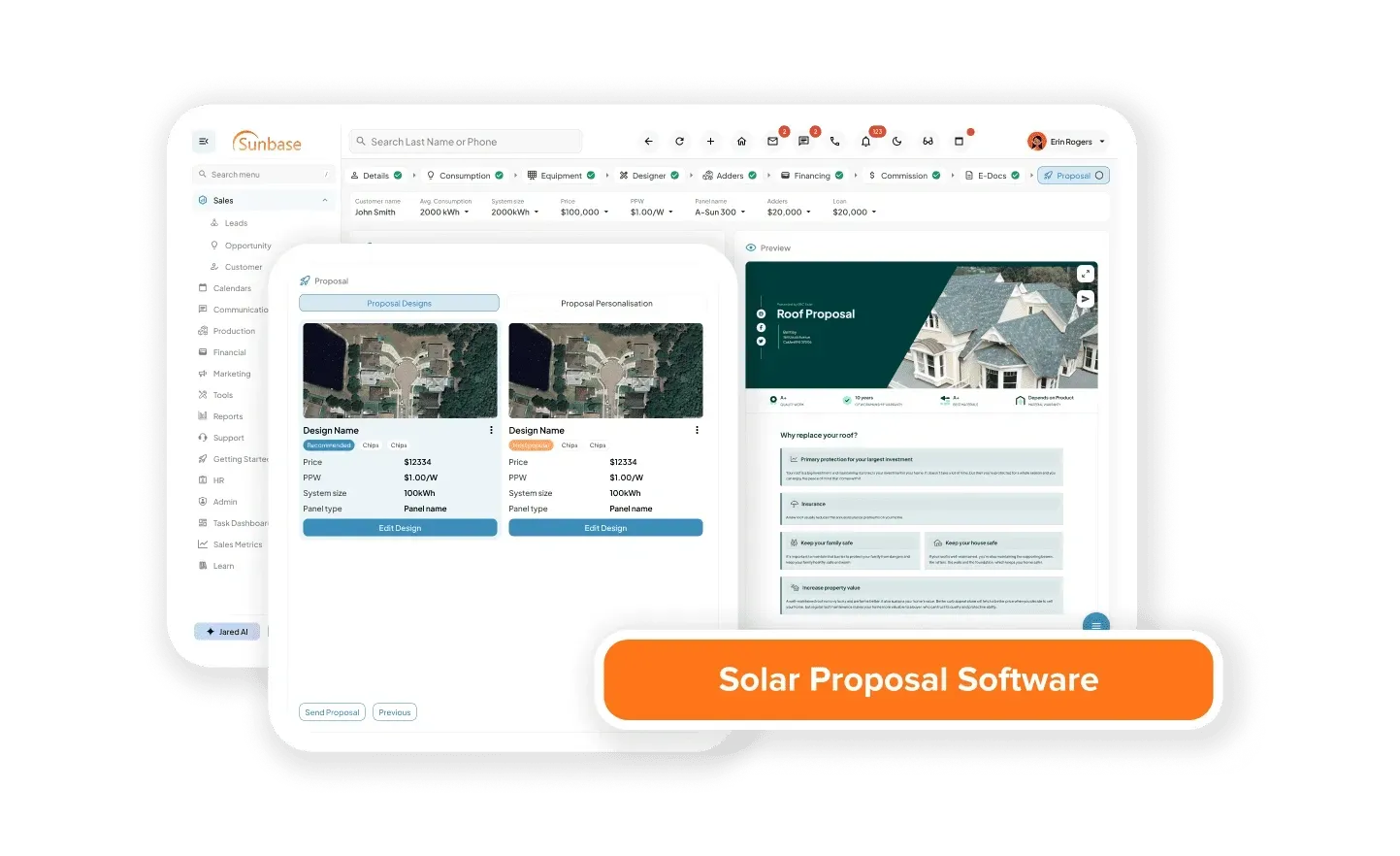
Many solar companies still create proposals using disconnected spreadsheets, PDFs, pricing sheets, and manual approval workflows.
This creates inconsistencies between solar design data, financing options, utility savings calculations, battery configurations, and customer communication.
Without connected proposal workflows, sales reps often wait for:
- pricing approvals
- design revisions
- financing coordination
- manual proposal edits
- homeowner documentation
before sending proposals to customers.
Sunbase helps solar teams generate professional solar proposals faster using connected design data, financing integrations, production estimates, utility savings calculations, battery add ons, e signatures, and customer ready presentations.
Key Features
- Automated proposal generation
- Financing integrations
- E signatures
- Dynamic pricing
- Proposal templates
- Customer presentation tools
- Real time edits
- Proposal tracking
Why Proposal Speed Impacts Solar Sales
The faster a company delivers a professional proposal with accurate production estimates, financing options, battery configurations, and system visuals, the higher the chance of staying top of mind during the buying process.
Connected solar proposal workflows help reduce delays between design teams, financing approvals, proposal coordinators, and homeowners.
Solar Project Management Software for Installation Operations
Winning the sale is only one part of the solar workflow.
As projects move into installation, solar companies need visibility across permitting, AHJ approvals, inspections, installation scheduling, PTO coordination, crew assignments, homeowner updates, and project completion.
Without connected operational workflows, installation delays and communication gaps can negatively impact customer experience and operational efficiency.
Sunbase helps solar operations teams manage projects from signed contract to completed installation through one centralized operational platform.
Key Features
- Project tracking
- Installation scheduling
- Task management
- Team coordination
- Permit tracking
- Document management
- Workflow automation
- Real time project visibility
Why Solar Installation Delays Hurt Growth
Operational delays after the sale can impact:
- customer experience
- homeowner satisfaction
- payment timelines
- referral opportunities
- installation efficiency
Connected solar project management workflows help improve installation coordination, permitting visibility, PTO tracking, and communication between office teams, field crews, and homeowners.
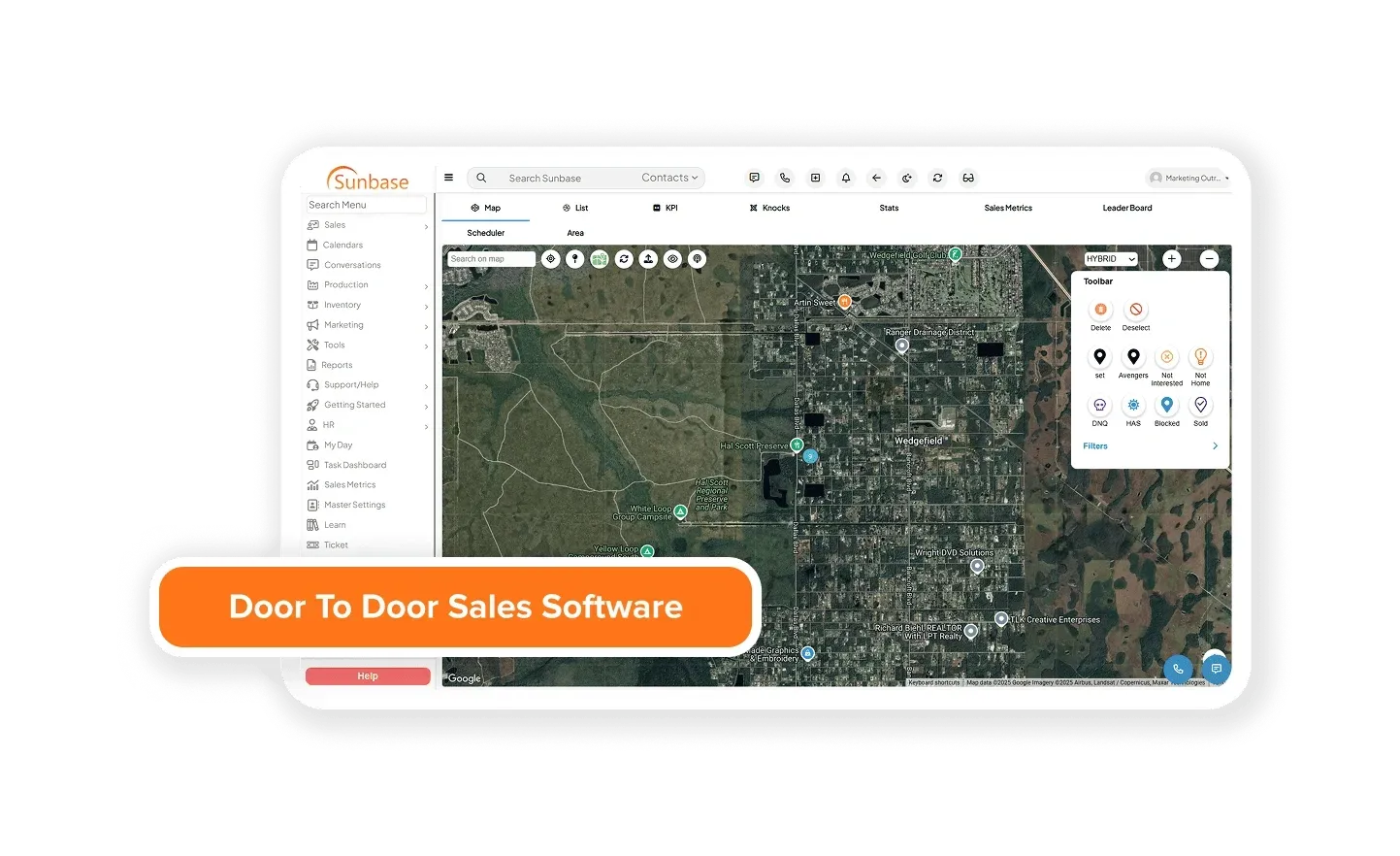
Field sales continues to be one of the most effective lead generation channels for many solar companies.
Managing canvassing teams without visibility into territory coverage, rep activity, appointments, homeowner interactions, and field performance often creates accountability issues and inconsistent results.
Sunbase helps solar canvassing teams manage territories, route optimization, appointment setting, homeowner tracking, rep accountability, and field performance from one connected platform.
Features
- Territory management
- Live rep tracking
- Appointment setting
- Route visibility
- Performance tracking
- Mobile field tools
- Team leaderboards
- Rep accountability
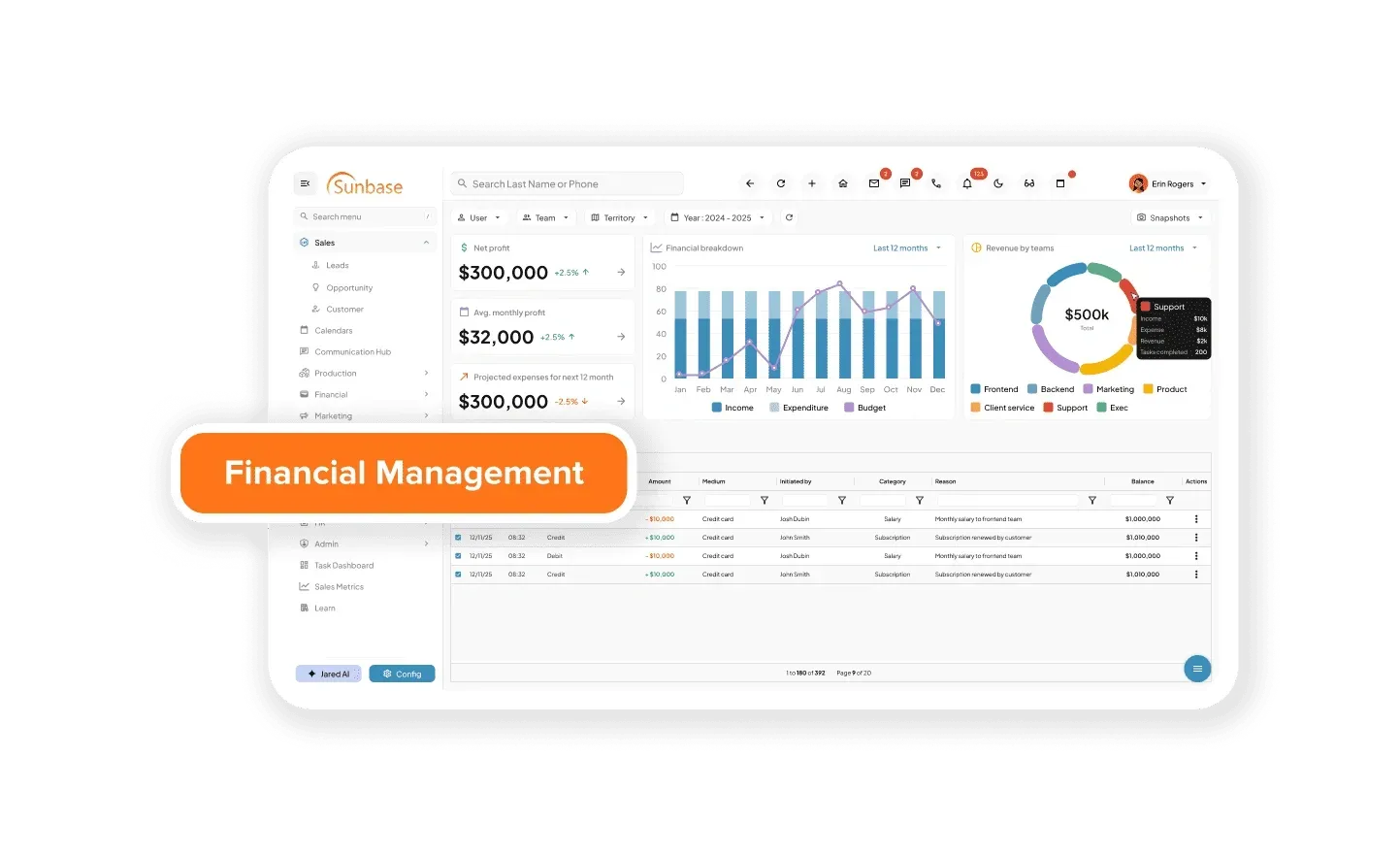
Disconnected financing workflows can delay proposal approvals and create confusion for homeowners during the buying process.
Many solar companies manage financing coordination, lender communication, homeowner documentation, proposal approvals, and customer updates across multiple systems.
This often creates delays between sales teams, financing coordinators, and homeowners.
Sunbase helps solar companies streamline financing coordination, lender workflows, proposal approvals, customer communication, and operational updates through one connected platform.
Features
- Financing coordination
- Approval tracking
- Document workflows
- Customer notifications
- Status visibility
- Workflow automation
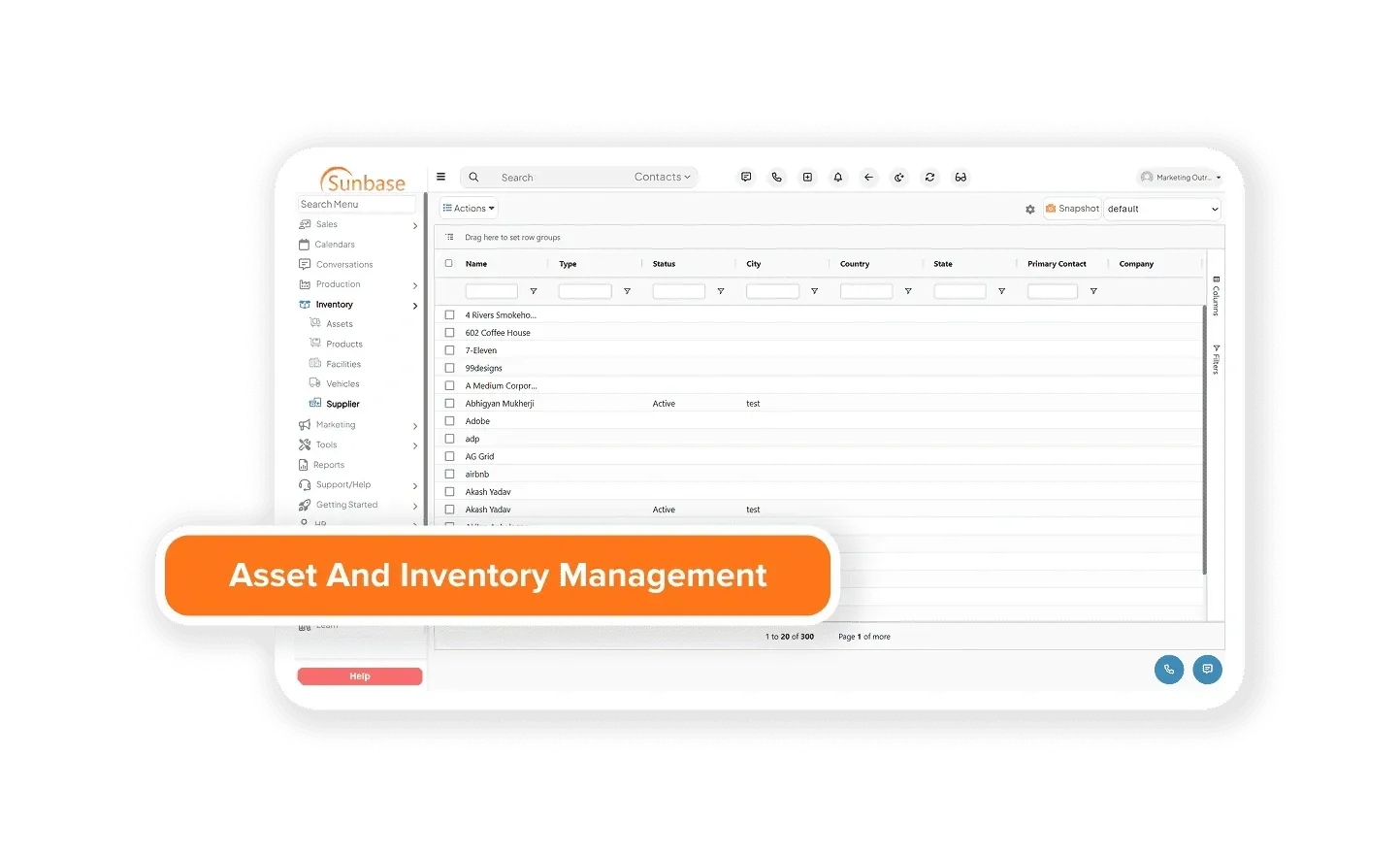
As solar companies scale, operational visibility becomes increasingly important across panel inventory, inverter tracking, material allocation, installation coordination, warehouse management, and project workflows.
Without centralized operational tracking, teams often struggle to monitor:
- material usage
- installation progress
- workflow delays
- inventory shortages
- operational performance
across multiple projects.
Sunbase helps solar operations teams manage inventory, installation coordination, operational workflows, reporting, and project visibility from one centralized operational platform.
Features
- Inventory management
- Material tracking
- Operational dashboards
- Workflow monitoring
- Team coordination
- Reporting tools
Multiple Solar Software Tools vs Connected Solar Operations Platform
| Multiple Disconnected Solar Tools | Connected Solar Operations Platform |
|---|---|
| Separate tools for CRM, solar design, proposals, and project management | One centralized solar workflow |
| Delayed proposals and approvals | Faster proposal turnaround |
| Disconnected sales and design workflows | Connected solar sales and design system |
| Spreadsheet tracking and manual updates | Real time operational visibility |
| Manual follow ups and scattered communication | Automated workflows and centralized communication |
| Limited rep accountability | Full sales and operational visibility |
| Disconnected sales and installation teams | Unified project coordination |
| Repeated data entry across platforms | Centralized customer records |
| Operational bottlenecks and workflow delays | Streamlined solar operations |
Built for Growing Solar Companies
Supporting solar installers, EPC companies, and solar sales teams across CRM, solar design, proposals, financing, installations, project management, and operational workflows.
1600+
Solar companies trust Sunbase
1000+
Solar Proposals created monthly
5700+
Solar Designs Created
99%
End-to-end solar lifecycle coverage
Sunbase helps growing solar companies streamline lead management, rooftop design, proposal generation, installation coordination, permitting workflows, and operational visibility through one connected solar software platform.
Why Solar Companies Use All In One Solar Software Instead of Multiple Tools
As solar businesses grow, disconnected systems often create workflow delays, communication gaps, operational inefficiencies, reporting limitations, and inconsistent customer experiences across sales, design, and installation teams. Many solar companies still use separate tools for CRM, solar design, proposals, financing, project management, scheduling, and operational tracking, making it difficult to maintain visibility across the entire workflow.
Sunbase helps unify the complete solar sales and operational workflow into one connected system built specifically for solar installers and EPC companies.
Better Team Coordination
Connect sales, design, operations, and installation teams through one centralized workflow.
Faster Proposal Turnaround
Reduce delays between lead qualification, solar design, financing approvals, and proposal generation.
Improved Operational Visibility
Track projects, installations, appointments, customer workflows, and operational performance from one dashboard.
Reduced Software Complexity
Replace multiple disconnected systems with one centralized solar software platform.
Best Solar Software for Installers
The best solar software for installers helps manage solar design, proposals, financing, permitting, installation scheduling, project coordination, and operational workflows from one connected platform.
Modern solar installers are moving away from disconnected systems and adopting connected solar operations platforms that help streamline workflows from lead generation to completed installation.
Platforms such as Sunbase combine solar design, proposal generation, financing workflows, installation coordination, and operational visibility into one connected workflow built specifically for solar businesses.
Best Software for Solar EPC Companies
The best software for solar EPC companies helps manage rooftop solar design, proposal generation, permitting workflows, installation coordination, PTO tracking, inspections, and operational visibility from one centralized platform.
As EPC companies grow, disconnected systems often create communication gaps between sales teams, design teams, and installation operations.
Connected platforms like Sunbase help EPC companies streamline workflows across sales, design, project management, and installation coordination through one operational system.
Best All In One Solar Software Platform
The best all in one solar software platform helps solar businesses manage solar design, proposals, financing, project management, installations, customer communication, and operational workflows from one centralized system.
Instead of switching between multiple tools, many growing solar companies use connected platforms like Sunbase to improve proposal turnaround time, operational visibility, installation coordination, and workflow efficiency across the business.
What Software Do Solar Companies Use?
Solar companies typically use software for solar design, proposal generation, financing coordination, permitting, scheduling, installation management, operational reporting, and customer communication.
Many growing solar businesses are replacing disconnected tools with connected solar operations platforms like Sunbase to streamline workflows across sales, design, operations, and installation teams.
FAQs about Solar Software
What is solar software used for?
Solar software helps solar companies manage the complete business workflow including lead management, solar design, proposals, financing, project management, installations, customer communication, and operational tracking from one centralized platform.
Instead of using multiple disconnected systems, modern solar companies use all in one solar software to streamline workflows, improve team visibility, and manage the customer journey from lead generation to completed installation.
What is the difference between solar CRM software and all in one solar software?
Solar CRM software primarily focuses on lead management, customer communication, sales pipelines, and follow ups.
In contrast, all in one solar software connects CRM, solar design, proposals, financing, project management, installations, scheduling, and operational workflows into one connected system.
Many solar companies start with a CRM, but as the business grows, they often need a complete solar operations platform to manage the full workflow more efficiently.
What is the difference between solar software and solar design software?
Solar design software mainly focuses on creating rooftop layouts, shading analysis, system sizing, and production estimates for solar projects.
In comparison, solar software is a broader platform that helps solar companies manage CRM, solar design, proposals, financing, installations, project management, customer communication, and operational workflows from one system.
Many solar companies use separate solar design tools, but all in one solar software platforms help connect the design process directly with sales and operational workflows.
How is all-in-one solar software different from using multiple solar tools?
Using multiple solar tools creates disconnected data, repeated entry, and workflow gaps. All-in-one solar software keeps leads, designs, proposals, and project stages in one shared record. This improves accuracy and team coordination.
Why do solar companies use multiple software tools?
Many solar companies use separate tools for CRM, solar design, proposals, financing, scheduling, project management, and communication because different systems specialize in different parts of the workflow.
Over time, these disconnected tools can create proposal delays, duplicate data entry, communication gaps, operational inefficiencies, and limited visibility across teams.
This is why many growing solar companies move toward all in one solar software platforms that unify the workflow into one connected system.
What software do solar EPC companies use?
Solar EPC companies typically use software for CRM, solar design, proposal generation, financing coordination, project management, scheduling, installation tracking, and operational reporting.
Many EPC companies use multiple disconnected systems, while modern solar operations platforms help centralize these workflows into one operational dashboard.
Can solar software help manage installations?
Yes. Modern solar software platforms help manage installation scheduling, permits, inspections, task tracking, crew coordination, documentation, and project progress from one connected workflow.
This helps solar companies improve operational visibility, reduce delays, and coordinate installation teams more efficiently.
How does solar proposal software improve close rates?
Solar proposal software helps companies generate faster and more professional proposals using connected pricing, financing, solar design data, and customer information.
The faster a homeowner receives a clear and accurate proposal, the higher the chance of staying top of mind during the buying decision process.
Connected proposal workflows also help reduce delays between sales teams, design teams, and financing coordination.
What features should solar installer software include?
Modern solar installer software should include CRM, rooftop solar design, proposal generation, financing coordination, scheduling, project management, installation tracking, reporting, and operational visibility.
An all in one solar software platform helps installers manage the complete customer and operational workflow from lead capture to completed installation.
Why is operational visibility important for solar companies?
Operational visibility helps solar companies track sales pipelines, installation progress, team activity, project timelines, operational bottlenecks, and customer communication across the business.
Without centralized visibility, it becomes difficult to identify delays, coordinate teams, and manage workflows efficiently as the company grows.
Still Using Too Many Tools to Run Your Solar Business?
Unify your solar CRM, design, proposal, and project workflows in one connected solar software platform.

